

Do you often think, "My wife is disrespectful, and I don't know what to do?"
If you’re reading this, you’re probably not looking to blame your wife — you’re trying to understand why and what you can do without making things worse.
Feeling disrespected by your partner can be painful, confusing, and deeply isolating — especially when you still care about the relationship.
This article isn’t about labeling your wife as “the problem.”
It’s about helping you recognize harmful patterns and respond in a way that protects your self-respect and the relationship.
Table of Contents
Why disrespect affects men differently than people realize
Many men don’t openly talk about feeling emotionally hurt in their marriage.
Instead, they quietly adapt.
Some become more withdrawn.
Some stop expressing vulnerability altogether.
Others throw themselves into work, hobbies, or distractions to avoid feeling rejected or criticized at home.
Over time, repeatedly feeling disrespected can affect:
- Confidence
- Emotional openness
- Sexual intimacy
- Motivation to connect
And because many men are taught to “just deal with it,” they often wait far too long before asking for help.
This is part of why disrespect can become so corrosive in marriage.
Not because one argument causes damage, but because ongoing emotional disconnection slowly changes how both partners relate to each other.
7 signs of a disrespectful wife
First, let’s explore seven red flags that your wife doesn't respect you.
If any of these sound familiar, you're not alone.
Many husbands feel disrespected at some point in their marriages.
While feeling frustrated and stuck is normal, know there is hope.
With the right approach, you can begin addressing the underlying issues and rebuilding mutual respect.
Before anything changes, one thing matters more than techniques:
You cannot repair disrespect by tolerating it — or by attacking it.
The goal is to interrupt the pattern without becoming someone you don’t respect.
Wife is disrespectful sign #1: Contempt and criticism replace respect

If contempt has become part of your relationship dynamic, it may be a sign that respect and emotional safety have started to break down.
Contempt involves negative body language (like eyerolling) and remarks that convey a sense of superiority, implying, "I'm better than you."
For instance, your wife might mock you or use sarcasm to put you down.
Alternatively, she may respond to your ideas and opinions in a way that belittles you, making you feel worthless.
Relationship researcher Dr. John Gottman found that contempt is the #1 most destructive behavior in relationships, and the biggest predictor of divorce.
Wife is disrespectful sign #2: Feelings are dismissed
Another way a wife shows disrespect is by disregarding her husband's feelings.
You might notice that she shuts you down when you try to express your emotions or needs, making you feel unheard and invalidated.
For example, you express anxiety about an upcoming family gathering, and your wife responds with, "It's not a big deal."
Her behavior may leave you questioning whether your feelings matter, which erodes trust and emotional safety in your relationship.
Over time, this can leave you second-guessing yourself:
“Am I overreacting?”
“Should I just stop bringing things up?”
Many men quietly withdraw here, because it starts to feel safer to say nothing at all.
Wife is disrespectful sign #3: Boundaries are pushed
In some relationships, boundaries begin getting crossed repeatedly, leaving one partner feeling unseen, dismissed, or emotionally unsafe.
For instance, your wife might invade your privacy, ignore your need for personal space, or violate your trust.
When boundaries are repeatedly crossed, it can feel like your needs, privacy, or emotional safety are not being taken seriously.
Boundaries are not punishments.
If a relationship can only survive when you abandon your self-respect, the problem isn’t boundaries — it’s the dynamic.
Wife is disrespectful sign #4: A lack of respect in public
If your wife makes you feel inadequate in front of others, it’s a sign that she doesn't respect you.
For instance, she makes negative comments (even if they're "jokes") to make you look bad in front of friends, family, or co-workers.
Further, she may compare you to other men, saying, “Why can’t you be more like X?” or “My ex was so much smarter.”
Wife is disrespectful sign #5: There is more blame than responsibility
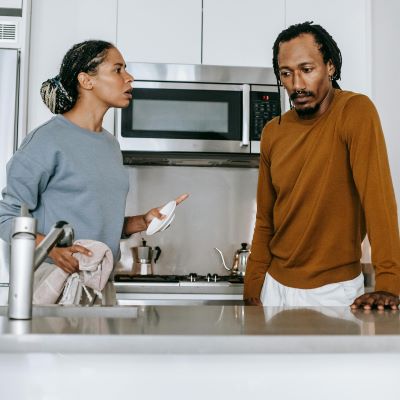
In some relationships, blame starts to outweigh accountability.
One partner may become highly focused on the other person’s mistakes while struggling to acknowledge their own impact on the relationship dynamic.
Even if you make a mistake and do your best to repair it, you feel like she constantly reminds you of your past failures.
Wife is disrespectful sign #6: Control and micromanaging become common
Some wives may show disrespect for their husbands through controlling or micromanaging behavior.
Sometimes this develops gradually through anxiety, stress, or loss of trust in the relationship—not intentional control.
This pattern can sometimes be hard to recognize because she may claim she's only "helping" or showing concern.
However, it sends the message that your wife believes you cannot handle situations or make decisions on your own.
For example, your wife might say, "Why are you even bothering with that job? You should focus on something more practical, like I've been suggesting," or "You always make the wrong choices. I'm just trying to save you from yourself."
Wife is disrespectful sign #7: Dishonesty and manipulation increase
Dishonesty is a major red flag of disrespect in marriages.
Deception and emotional pressure can take many forms, including hiding information, avoiding honesty, using guilt, or withdrawing during conflict.
For example, she might use guilt trips or silent treatment after you make a mistake, so you feel pressured to do what she wants.
What disrespect is — and what it isn’t
Every marriage has moments of frustration, stress, or poor communication.
A disrespectful moment during conflict does not automatically mean your wife is a disrespectful person.
What matters is the overall pattern.
Disrespect becomes a serious issue when behaviors like criticism, contempt, humiliation, dismissal, or control become frequent, predictable, and unresolved.
It’s also important to distinguish disrespect from:
- Healthy disagreement
- Boundary-setting
- Honest feedback
- Temporary stress reactions
- Unmet and unexpressed needs
Not every difficult interaction is toxic.
But when someone consistently feels belittled, emotionally unsafe, or chronically dismissed, the relationship dynamic deserves attention.
What causes a wife to lose respect in a marriage?
There is rarely one single reason a wife loses respect for her husband.
More often, respect erodes gradually through unresolved relationship patterns.
Sometimes this happens because:
- Emotional connection has broken down.
- Resentment has built over time.
- Conflict no longer feels safe or productive.
- Feeling unseen, unsupported, or emotionally alone.
In other cases, deeper issues like broken trust, avoidance, emotional withdrawal, dishonesty, or repeated disappointments may be involved.
It’s also important to understand that respect and emotional safety influence each other.
When couples stop feeling emotionally connected, respectful communication often deteriorates too.
This doesn’t justify contempt, humiliation, or controlling behavior.
But understanding the underlying dynamics can help couples address the root issue instead of only reacting to the symptoms.
Why disrespect in marriage often becomes a cycle
Many husbands assume disrespect is just about attitude or personality.
But in long-term relationships, disrespect usually becomes part of a cycle.
For example:
- Your wife feels overwhelmed by over functioning, unheard, or unseen.
- Your wife criticizes or dismisses you.
- You feel hurt, frustrated, or shut down.
- You withdraw, become defensive, or stop bringing things up.
- She feels even more disconnected or resentful.
Over time, both people begin reacting not just to the current moment, but to years of unresolved frustration and emotional injury.
That doesn’t excuse disrespectful behavior.
But it does help explain why simply “trying harder” or having the same conversation repeatedly often doesn’t create change.
Most couples don’t need more willpower.
They need a way to interrupt the pattern underneath the behavior.
What do you do if your wife disrespects you?
When your wife disrespects you, your first instinct may be to respond similarly.
However, attacking her back will only escalate negativity and deepen the divide.
You can break the cycle and move toward a healthier relationship dynamic by approaching the situation differently.
Now, let's explore 7 steps to address your wife's behavior and begin rebuilding respect in your marriage.
If you've been feeling disrespected by your wife
When disrespect becomes chronic, most couples can’t resolve it through one conversation alone.
Because at that point, the issue usually isn’t just communication.
It’s the cycle both people are stuck inside.
If you feel:
- Drained by repeated conflict.
- Emotionally shut down.
- Like conversations go nowhere.
- Or unsure whether things can actually improve.
Structured support can help.
👉 Book a Complimentary Couples Consultation →
Or if you already know the relationship needs deeper repair:
👉 Explore the Relationship Repair Program →
1. Reflect on the situation

First, take the time to reflect on why your wife may be acting disrespectfully.
Is this a long-standing pattern of behavior, or did something recent trigger her actions?
There are various reasons why your wife might be treating you disrespectfully, such as unmet needs, stress, or unresolved relationship problems.
It’s also possible your wife is feeling overwhelmed herself.
Your wife is probably feeling overwhelmed
Many women carry an invisible load in marriage and family life — managing schedules, anticipating needs, handling emotional labor, keeping track of the household, or feeling responsible for everyone’s well-being.
When that load goes unnoticed, some wives begin to feel less like they have a partner and more like they are carrying the relationship alone.
That does not make criticism, contempt, or disrespect okay.
But it may help you understand what her frustration is pointing to.
Underneath the disrespect, she may be longing for a teammate.
She may want to feel supported, considered, and not alone in the responsibilities of daily life.
2. Communicate your feelings
First, sit down with your wife and express your feelings.
Instead of making accusations about her behavior, focus on sharing your experience.
For example, you might say, "I feel hurt when you call me names in front of others," or "I feel unheard when you interrupt me while I'm talking."
When talking about it keeps making things worse
Many couples have already tried talking about the disrespect before they ever search for help.
But instead of creating understanding, the conversation turns into:
- Defensiveness
- Escalation
- Shutdown
- Or repeating the same unresolved argument
At that point, the issue usually isn’t just communication.
It’s that both people are reacting from hurt, frustration, and accumulated emotional tension.
This is why many couples get stuck trying harder to explain themselves—while feeling less and less understood.
What often helps isn’t repeating the same conversation more intensely.
It’s changing the pattern underneath the conversation itself.
3. Listen to your wife's concerns
While you may try to guess why your wife is acting disrespectfully, the best way to find out the real reason is to ask her directly.
Disrespect often stems from unmet needs or unresolved frustrations within a relationship.
In many marriages, unresolved resentment or emotional disconnect slowly changes how partners communicate with each other.
Encourage your wife to share her concerns about the relationship.
Listen as she shares without interrupting or becoming defensive.
Try to put yourself in your wife's shoes and empathize with her feelings, even if you see the situation differently.
For many wives, the frustration is not simply, “You did something wrong.”
Your wife's frustration may be unmet needs
“I feel like I’m holding too much.”
“I don’t feel supported.”
“I don’t feel like we’re in this together.”
“I’m tired of asking for the same things.”
Again, understanding her experience does not mean abandoning your own.
Your feelings still matter. Your boundaries still matter. Respect still matters.
But if you can slow down enough to ask, “What might be happening underneath her reaction?” you may be able to respond with more clarity instead of only reacting to the disrespect itself.
The goal is not to excuse harmful behavior.
The goal is to understand the pattern well enough to change it.
4. Set clear boundaries

Next, set boundaries with your wife about what is and isn't acceptable in your relationship.
Let her know how you will respond if you're feeling disrespected.
For example, you might say, "If you start insulting me or calling me names, I will leave the room to give us space to cool down."
While you can't control your wife's behavior, setting and maintaining these boundaries allows you to preserve your self-respect.
5. Strengthen your emotional connection
Another helpful strategy for dealing with a disrespectful wife is improving your emotional connection.
Her disrespectful behavior may stem from feeling emotionally disconnected or neglected.
Spending quality time together is a powerful way to improve emotional intimacy.
Make an effort to carve out time for activities you enjoy, whether going on a date night, engaging in a shared hobby, or simply having meaningful conversations.
6. Seek professional support
It may be time to seek professional support if you've tried talking to your wife and setting boundaries, but the disrespect continues.
A marriage counselor will help you identify harmful patterns in your relationship and guide you through breaking the cycle of disrespect.
Additionally, a marriage counselor will provide practical tools and strategies for deepening trust, respect, and intimacy and moving toward a healthy, loving relationship.
When disrespect becomes the pattern, willpower isn’t enough.
Most couples don’t get stuck because the cycle keeps repeating — even when both partners want things to improve.
A complimentary couples consultation gives you a clear answer to one question:
Is this something that can be repaired — and if so, what would it take?
👉 Schedule a Complimentary Couples Consultation
(Private. Practical. No pressure.)
A real example of how disrespect can shift
One couple I worked with came into the Repair Program feeling deeply stuck in this exact dynamic.
The husband described his wife as constantly critical, dismissive, and impossible to please. He felt like no matter what he did, she attacked him, corrected him, or made him feel small.
Over time, he had started withdrawing emotionally because it felt safer than trying and getting criticized again.
From his perspective, she seemed angry all the time.
From her perspective, she felt completely alone in the marriage.
As we uncovered the pattern, it became clear that underneath her contempt was years of unresolved resentment.
She felt overwhelmed carrying the emotional and practical load of the relationship and family life. She didn’t feel supported, considered, or emotionally prioritized.
For years, she had tried bringing this up through frustration, criticism, and anger, but the more critical she became, the more he withdrew.
And the more he withdrew, the more abandoned and resentful she felt.
Neither of them felt understood.
They were trapped in a disrespect cycle
Through the Repair Program, they began learning how to interrupt that pattern differently.
Instead of only reacting to the criticism itself, they started addressing the deeper emotional injuries underneath it. He became more emotionally engaged and proactive in areas where she had long felt alone.
She learned how to express hurt and needs more directly instead of through contempt and attack.
As emotional safety slowly improved, something important happened:
The hostility decreased.
Not because she was told to “just be nicer,” but because she no longer felt alone, unheard, and emotionally overwhelmed in the relationship.
And as he stopped feeling attacked, he became more open, connected, and responsive too.
The goal was never to decide who the “bad partner” was.
It was to understand the cycle keeping both of them stuck—and help them create a new one.
Is disrespect a sign that the marriage is over?
Occasional moments of disrespect can happen in even healthy relationships—especially during periods of stress, exhaustion, or unresolved conflict.
A single comment or argument, while painful, doesn’t usually define the future of a marriage.
What matters far more than isolated incidents is pattern.
When disrespect becomes frequent, predictable, or unaddressed, it often signals a deeper breakdown in emotional safety, communication, or mutual trust.
Over time, these patterns can harden into contempt, withdrawal, or chronic resentment if nothing interrupts them.
The good news is that recognizing disrespect early—before it becomes the dominant dynamic—creates an opportunity for change.
Many couples repair and rebuild respect once the underlying cycle is identified and addressed.
Can a marriage recover after long-term disrespect?
Yes—but relationship repair usually requires more than willpower or good intentions.
When disrespect has been present for a long time, it often means the couple has been stuck in a repeating cycle: criticism followed by defensiveness, withdrawal followed by frustration, or silence followed by emotional distance.
In these cases, simply “trying harder” or being more patient rarely creates lasting change.
Recovery is most likely when couples
- Interrupt unproductive communication patterns.
- Rebuild emotional safety before tackling sensitive issues.
- Address unresolved hurts that continue to resurface.
- Set clear boundaries around what is and isn’t acceptable.
Many couples benefit from structured support at this stage—especially when disrespect overlaps with issues like ongoing conflict, emotional withdrawal, or breaches of trust.
With the right guidance, even long-standing patterns can shift, allowing respect, connection, and partnership to slowly return.
Learn more about the Relationship Repair Program.
What causes disrespect to grow in a marriage?

Disrespect in marriage usually develops through unresolved patterns over time, not from one isolated issue. These can include unmet emotional needs, unresolved conflicts, built-up resentment, poor communication, and personal struggles or stressors. It's important to remember that disrespect is rarely one-sided, as both partners contribute to the relationship dynamic.
When a man feels disrespected in a relationship?

When a man feels disrespected by his partner, he may experience adverse effects such as frustration, anger, anxiety, stress, and a decrease in self-worth and confidence. One husband might fight back, while another may withdraw from emotional or sexual intimacy to avoid further hurt or disappointment.
What is belittling in a relationship?

Belittling refers to making your partner feel inferior, small, or unimportant, which can lead to many harmful effects. This behavior can manifest in various forms, including insults, name-calling, sarcasm, mocking, invalidating your partner's feelings, public humiliation, and constant criticism.
How do you deal with a disrespectful wife?

1.) Resist the urge to respond to disrespect with more disrespect. 2.) Consider what might be causing your wife's behavior. 3.) Calmly share your feelings. 4.) Communicate your needs and boundaries. 5.) Seek professional support. 6.) Model the behavior you want to receive.
Can disrespect ruin a marriage?
Yes—especially when disrespect becomes chronic and unresolved. Over time, repeated criticism, contempt, humiliation, or emotional dismissal can erode emotional safety and trust. Most marriages break down not because of one major event, but because unhealthy patterns continue without repair.
Why do I feel emotionally drained by my wife?
Feeling emotionally drained in a marriage often happens when conflict, criticism, or emotional disconnection become ongoing. Many husbands begin walking on eggshells, withdrawing emotionally, or avoiding communication altogether to prevent further conflict.
Excellent pieces. Keep posting such kind of info on your site.
Im really impressed by your blog.
Hello there, You’ve done a great job. I will certainly digg it and individually suggest to my friends.
I am confident they will be benefited from this website.